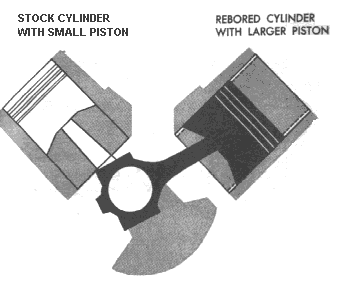
So how big can you bore your motor? Here's the way it was done in the early 1950's:
| BLOCK | ROAD JOB | COMPETITION |
|---|---|---|
| 49-52 F & M | 3 5/16" | 3 3/8"* |
| 46-48 F & M | 3 5/16" | 3 3/8"* |
| 39-42 M | 3 5/16" | 3 3/8"* |
| 39-42 F | 3 3/16" | 3 3/16" |
| 35-38 F | 3 3/16" | NOTE 1 |
| 32-34 F | 3 3/16" | 3 3/16" |
F = Ford
M = Mercury
* = Will probably crack from bolt holes to edge of cylinder.
NOTE 1 = Bore as little as needed to clean up the cylinder. .060" over
is usually safe, .100" over will sometimes "fall through".
Large bores (>3 3/8") will tend to balloon-out at full power, causing increased blow-by and a loss of power. Large bores also increase the chance of cracking around the bores. If you plan to keep the motor for a long time, start with a bore size that will allow you to clean up bore the motor again in the future. I like this thought from a 1950's manual, "If you are racing in a class where every HP must be obtained, then go to the limit and don't worry about losing an occasional engine - it's to be expected in competition and there is absolutely nothing that anyone can do about it!" Somehow I don't think flathead blocks are that easy to come by today.
Here's a chart
from Hot Rod magazine.